.svg)


.svg)
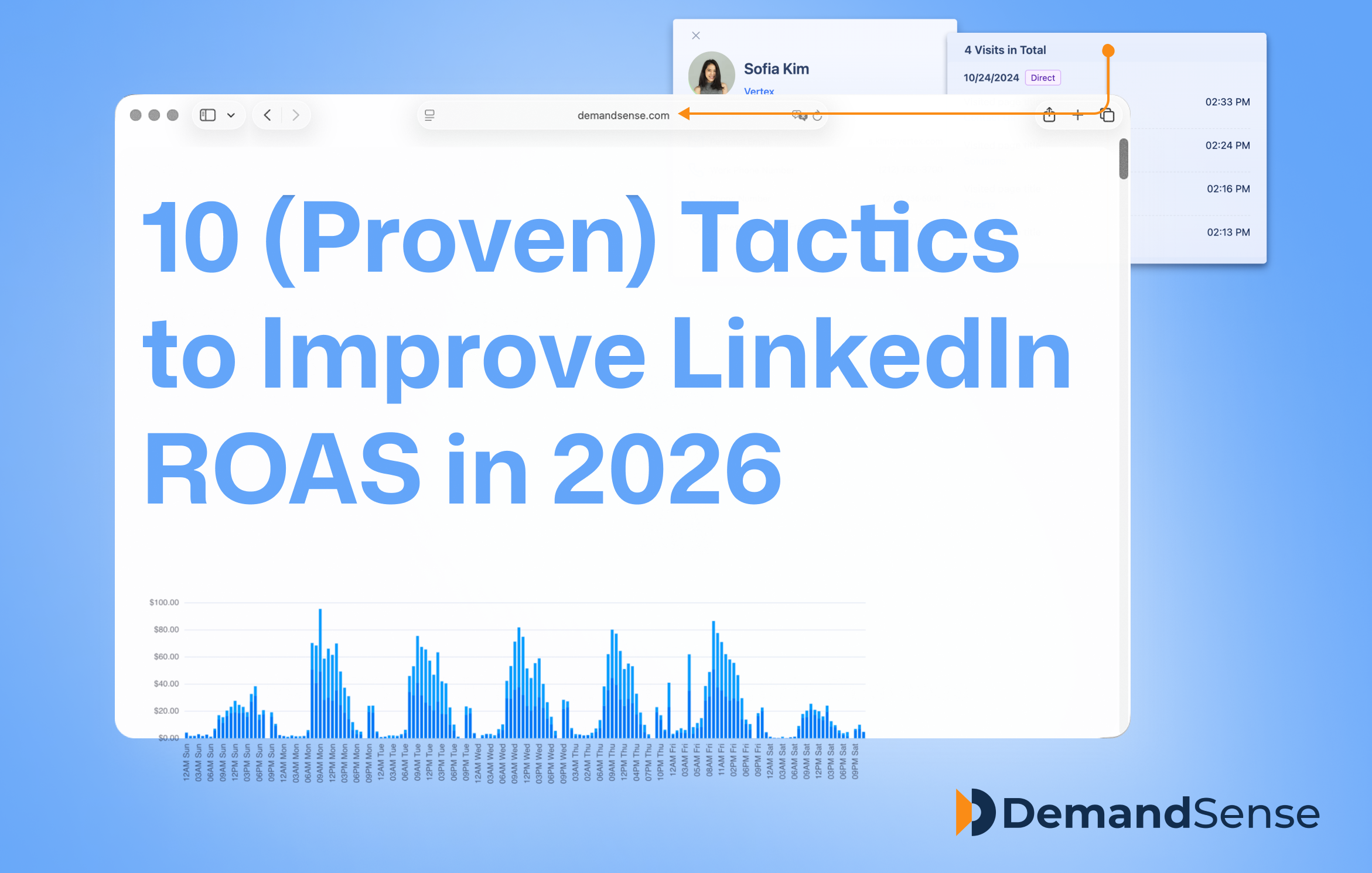
Doesn't it feel like running LinkedIn ads gets more expensive every year?
Probably because it is.
CPCs have hit ~$7 for most B2B advertisers, meanwhile, most platforms only capture 20-30% of what LinkedIn actually drives, losing those precious clicks along the way.
So when your CMO asks "Is this worth it?" you're stuck defending a channel you can't fully measure.
Here's what makes it frustrating: LinkedIn works. It delivers 113% ROAS for B2B, outperforming Google and Meta. But the platform has changed. What worked two years ago doesn't deliver the same results now.
This guide covers 10 tactics that improve LinkedIn ad performance in 2025. Most are straightforward optimizations. A few require rethinking your approach entirely. All of them are proven.
Let's get into it.
#1 Optimize Funnel-Wise
Your awareness-stage prospects and your ready-to-buy prospects are scrolling the same LinkedIn feed. If you're showing them the same ad, you're burning the budget.
Segment your audiences by funnel stage. Create separate campaigns for top-of-funnel (problem awareness), middle-of-funnel (solution education), and bottom-of-funnel (decision stage).
- TOFU audiences get thought leadership content, industry insights, and problem-focused messaging
- MOFU audiences see case studies, comparison content, and educational resources.
- BOFU audiences get pricing pages, demo offers, and customer testimonials.
The messaging should match where they are. Someone who's never heard of you doesn't care about your product features. Someone comparing vendors doesn't need a "what is X" guide.
Why it works: LinkedIn's algorithm rewards relevance. When you match a message to the audience stage, your engagement scores improve, your CPCs drop, and your conversion rates climb.
#2 Always Test Your Ad Creatives
Ad fatigue sets in after about 14 days. Your audience has seen your creative, decided whether to engage, and moved on.
Set up A/B testing. Test one variable at a time: headline, image, CTA, ad format. Run each test for at least a week with sufficient traffic.
- Start with headlines. Test problem-focused vs solution-focused vs stat-driven angles
- Then test visuals. people vs product shots vs data visualizations
- Finally, test CTAs. "Download the guide" vs "See how it works" can swing conversion rates by 20-30%.
Create a creative refresh calendar. New variations every 2-3 weeks keeps your ads from going stale.
#3 Use Matched Audiences for Laser-Focused Ads
If you have a CRM full of prospects or customers, you're sitting on targeting gold. LinkedIn's Matched Audiences feature lets you upload contact lists and target those exact people with your ads.
Other sources for Matched Audiences include:
- Contact list uploads: Export email addresses or company domains from your CRM and upload to LinkedIn Campaign Manager. Minimum 300 contacts for email lists or 1,000 for company lists.
- Website visitors: Use LinkedIn's Insight Tag to retarget people who visited specific pages. Target pricing page visitors with demo offers, blog readers with educational content, or case study viewers with customer stories.
- Video viewers: Build audiences of people who watched 25%, 50%, 75%, or 100% of your LinkedIn video ads. High completion rates signal genuine interest.
- Lead gen form fills: Retarget people who opened but didn't submit your LinkedIn lead gen forms, or nurture those who did submit.
- Event attendees: Upload lists of webinar registrants, conference attendees, or virtual event participants. These are warm audiences who've already shown interest in your space.
- Engagement audiences: Target people who engaged with your LinkedIn ads, posts, or company page. This includes reactions, comments, shares, and follows.
Why this works: You're targeting known entities, not demographic guesses. These people are already in your ecosystem. They've filled out forms, engaged with your content, or bought from you before.
Pro Tip: Automate Audience Optimization with Audience Tuning
Manual targeting adjustments don't scale. Audience Tuning shows you which industries, job titles, and company sizes are actually converting - then lets you upvote high-performers and downvote budget-drainers with one click.
The platform tracks all companies engaging with your ads, sorts by CPC/CTR/conversions, and automatically applies exclusions across campaigns. You see exactly which targeting parameters work and which waste budget, then optimize based on real engagement data instead of guesswork.
#4 Find Out Who's Actually Visiting Your Website (And Get in Front of Them)
Here's the brutal truth: 96% of your website visitors are anonymous.
You're paying $7-$12 per click to drive traffic to your site. Maybe 1,000 visitors per month. But only 3-4% fill out forms. The other 960 people browse your pricing page, compare your features, read your case studies, and leave without identifying themselves.
You have no idea who they are. You can't follow up. You can't retarget them intelligently. Your sales team has no visibility into which accounts are showing interest. And you definitely can't connect that traffic to revenue.
This is the single biggest leak in your LinkedIn ads funnel.
Why Does This Happen?
B2B sales cycles average 211 days. Buying committees have 6-10 people. Someone sees your LinkedIn ad, researches on multiple devices, discusses it internally, and converts months later.
LinkedIn's attribution window? 30 days.
Only 20-30% of LinkedIn's actual impact gets measured. The rest disappears.
What Website Visitor Tracking Does
Website visitor identification shows you who's on your site, even if they never fill out a form.
You see company details, individual names and titles, which pages they visited, and how long they spent. Then you can actually do something about it.
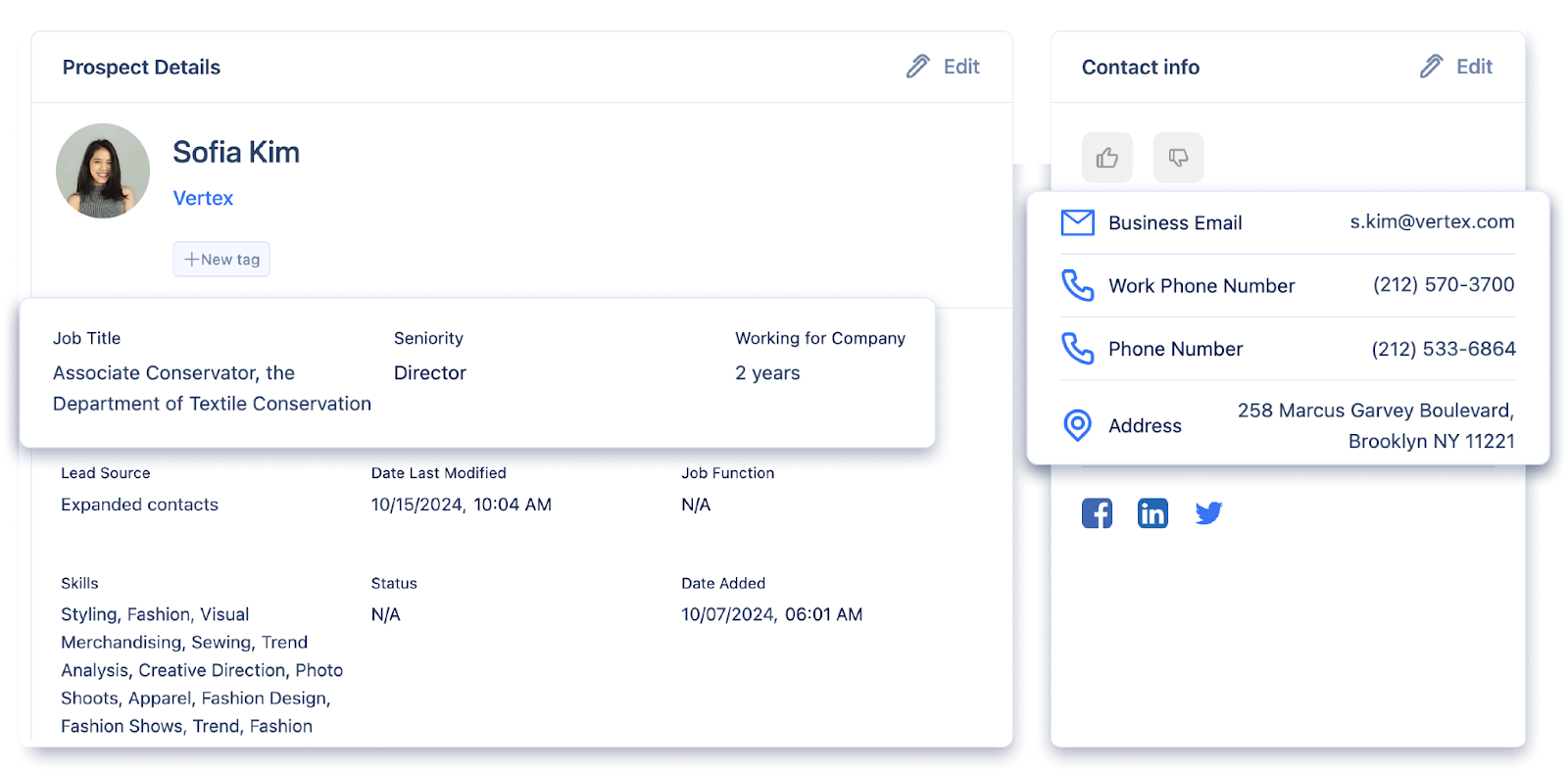
Build retargeting audiences based on real behavior. Pricing page visitors get demo offers. Blog readers get educational content. Our data shows this approach drives 2.5x higher conversion rates than cold prospecting.
Pro tip: Steal What's Working in Your Industry
Website visitor tracking doubles as competitive intelligence.
When you see which content drives high-intent behavior, you're getting real-time market research. ROI calculator converts 3x better than other content? Test that offer type in your ads. Pricing page traffic spikes after a value prop change? Roll that messaging into your campaigns.
DemandSense tracks these patterns systematically by showing you which offers and angles actually drive buying behavior. Use that intelligence to inform your creative testing and campaign strategy.
#5 Cap How Often People See Your Ads
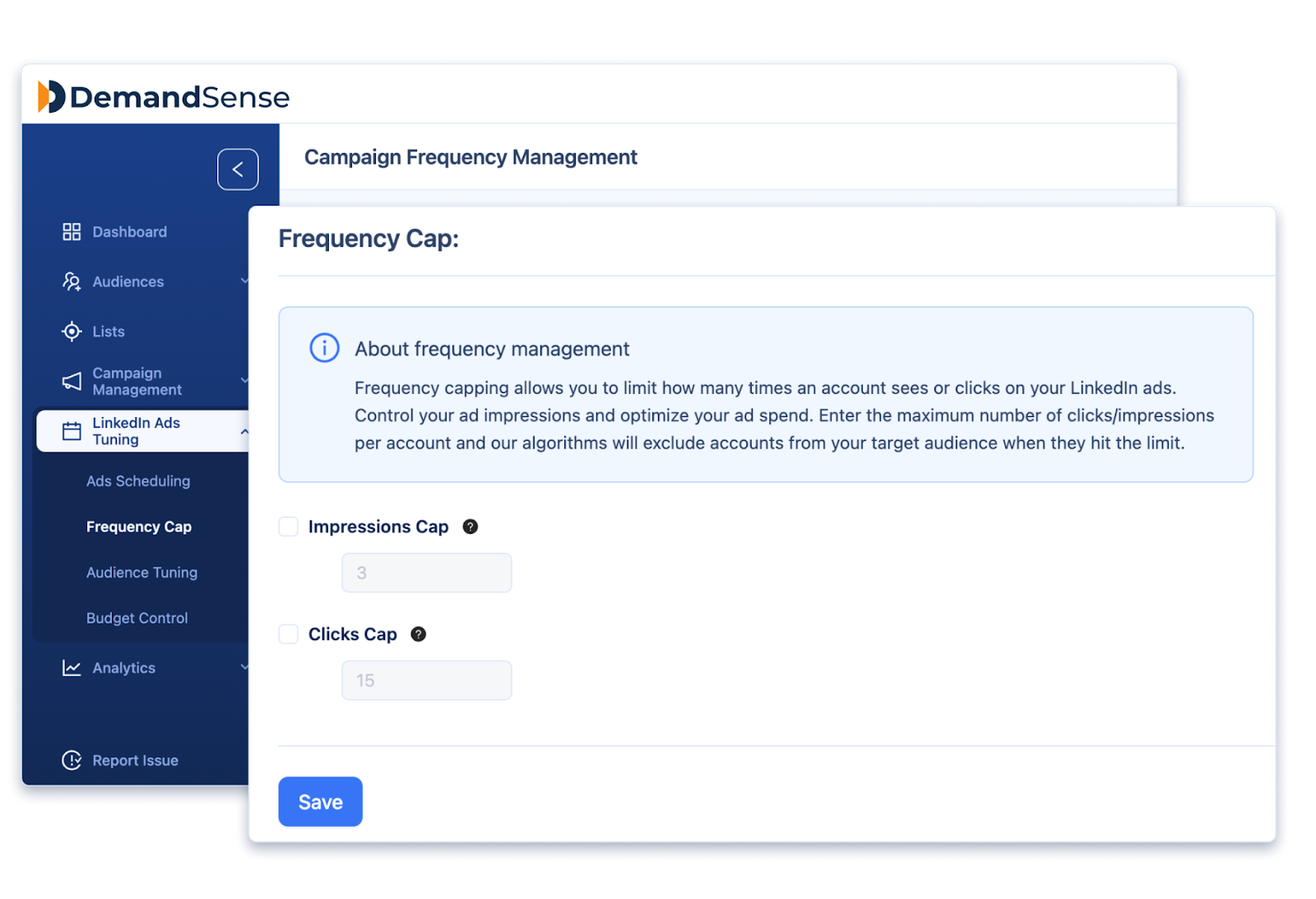
LinkedIn doesn't automatically limit how many times someone sees your ads.
Without frequency capping, you'll burn budget showing the same ad to the same person 20+ times while never reaching new prospects. Your impressions concentrate on a small group instead of spreading across your target audience.
Why this matters: Ad fatigue kills performance after about 14 days of repeated exposure. People stop engaging. Your relevance score drops. Your CPCs increase.
Frequency capping forces LinkedIn to show your ads to fresh audiences.
#6 Choose Quality Over Volume
A $50 CPL sounds better than $150 CPL. Until you realize the $50 leads never convert and the $150 leads close at 15%.
Instead of optimizing for cost per lead, start optimizing for cost per qualified lead or cost per opportunity.
Use LinkedIn's lead quality filters. Set minimum requirements for seniority, company size, or industry. Yes, your lead volume will drop. Your CPL will increase. But your sales team will actually follow up on the leads you generate.
According to our data, native LinkedIn lead gen forms generate leads at $810 CPL but convert at low rates due to friction-free submissions. External landing pages with more qualification questions cost $221 CPL but deliver higher-quality leads.
If you’re interested in more insights into LinkedIn Ads, check out our free 2025 LinkedIn B2B Benchmark Report.
The cheapest lead is worthless if it doesn't convert. The expensive lead that closes a $50K deal is invaluable.
Track your metrics all the way to closed revenue, not just form fills.
#7 Track Results Beyond 30 Days
LinkedIn's default attribution window is 30 days. Your average sales cycle is 211 days.
See the problem?
Most of LinkedIn's impact happens outside the standard measurement window. Someone sees your ad in January, researches in March, requests a demo in May, and closes in July. LinkedIn takes credit for nothing because the 30-day window expired.
Extend your attribution window to match your actual sales cycle. LinkedIn Campaign Manager allows up to 320 days for first-touch attribution. Use it.
Better yet, implement closed-loop attribution that tracks the complete journey from LinkedIn impression to website visit to demo to closed deal. This requires connecting LinkedIn data to your CRM and building custom attribution models.
The payoff: You'll prove LinkedIn's actual value instead of constantly fighting for budget because "the numbers don't show ROI."
#8 Use Video for Brand Awareness
Here's a stat that should get your attention: Only 15.4% of B2B LinkedIn advertisers use video ads.
And the ones who do see 33.6% completion rates, meaning one in three people who start your video watch it all the way through.
Video is massively underutilized in B2B, and that creates a competitive advantage for early adopters.
Why video works:
- Stronger recall through movement and sound
- Complex storytelling that text and images can't match
- Mid-funnel engagement for prospects who need education before converting
- Algorithm preference (LinkedIn's feed often boosts video content)
But here's the key: You don't need expensive production. The best-performing B2B videos are simple, message-first content. Founder perspectives filmed on smartphones outperform beautifully shot brand anthems that lack focus.
Optimal video length: 15-25 seconds for B2B ads. You get strong completion rates with enough time for complete message delivery.
Structure that works:
- 0-5 seconds: Hook with specific problem or outcome
- 5-15 seconds: Solution framework clearly articulated
- 15-25 seconds: Proof point or differentiator
- Clear CTA before second 20
Start simple. Test founder videos explaining customer pain points. Screen recordings with voiceover showing product value. Animated data visualizations. Customer testimonial clips.
The low adoption rate means differentiation through video is available now, but it's closing as more marketers recognize the opportunity.
#9 Check Your Account Lists for Potential Waste
Not everyone who clicks your ad is a potential customer. Job seekers checking your careers page. Students researching for projects. Competitors scoping your positioning. Companies too small or in the wrong industry.
These visitors waste ad spend on retargeting, consume sales time on dead-end leads, and skew your analytics.
Set up suppression lists. Exclude current customers (unless you're running upsell campaigns). Exclude companies below your minimum revenue threshold. Exclude industries where you have no product-market fit.
Pro tip: Use LinkedIn's audience exclusions and DemandSense's advanced industry filters to automatically suppress low-fit traffic from your nurture tracks and retargeting campaigns.
Our data shows 75% of B2B advertisers pay over $6 per click. If you're retargeting visitors who will never buy, you're compounding that waste.
Every dollar not spent on unqualified traffic is a dollar you can invest in reaching high-fit accounts.
#10 Test Your Bidding Strategy
LinkedIn offers three bidding strategies: maximum delivery (automated), cost cap, and manual CPC.
Most advertisers stick with one and never test alternatives. That's leaving money on the table.
- Automated bidding (maximum delivery) works well for new campaigns with limited data. LinkedIn optimizes for your goal while trying to spend your full budget.
- Cost cap sets a target cost per result. Good for stable campaigns where you know your target economics.
- Manual CPC gives you control but requires active management. Best for experienced advertisers who want precision.
Test different strategies in separate campaigns with identical targeting and creative. Run for 2-3 weeks with sufficient budget. Compare cost per result and overall performance.
What works varies by campaign objective, audience size, and competition. The only way to know is to test.
The Bottom Line
LinkedIn ads work. If you're measuring what actually matters and optimizing for real business outcomes instead of vanity metrics.
Most of these tactics are straightforward optimizations you can implement this week. But the one that makes the biggest difference (like identifying who's visiting your website) requires rethinking how you track and measure performance.
The advertisers winning on LinkedIn in 2025 aren't the ones with the biggest budgets. They're the ones who can see what's actually happening in their funnel and act on it.

![How to Use LinkedIn Sales Navigator Search Filters Like a Pro [2026 Guide]](https://cdn.prod.website-files.com/67160f781eeef22eaf34d58e/69ce69e4309170b938673cf6_LinkedIn%20Sales%20Navigator%20-%20Thumbnail.png)