.svg)


.svg)
Industry: Marketing Services
Campaign Type: Thought Leadership
Test Duration: 2 weeks
The Challenge
B2B marketing agencies face a unique pressure point: they need to prove ROI not just for their own campaigns, but for every client account they manage. When LinkedIn ad costs are climbing and attribution is murky, that pressure intensifies.
This agency was running thought leadership campaigns for multiple clients, trying to build awareness and establish expertise in competitive B2B markets. The problem wasn't creative or targeting—it was efficiency.
The core issues:
- Budget waste during off-hours. Campaigns ran 24/7 by default, burning budget when target audiences weren't active. Senior decision-makers don't scroll LinkedIn at 2am, but ads were still serving and clicks were still costing money.
- Rising costs eating into margins. With CPCs climbing across the platform, every wasted dollar on poorly-timed impressions made it harder to hit client KPIs and maintain healthy margins.
- No control over delivery timing. LinkedIn doesn't offer native hourly dayparting. The agency could set daily budgets and adjust bids, but they couldn't concentrate delivery during windows when their clients' audiences were actually engaged.
- Client pressure for better performance. When you're managing campaigns for B2B clients, "we're doing our best" doesn't cut it. The agency needed demonstrable efficiency gains to justify continued investment.
The question became: could strategic ad scheduling improve performance enough to matter?
The Approach
To isolate the impact of timing, the agency structured a clean A/B test using DemandSense's ad scheduling capabilities.
Test structure:
- Single thought leadership campaign targeting top-of-funnel B2B prospects
- Two variants: always-on delivery (control) vs. strategic scheduling (test)
- Same budget, same creative, same audience targeting
- Maximum delivery bidding to establish a performance baseline
- 2-week test period to gather statistically significant data
Strategic scheduling parameters:
The scheduled variant concentrated delivery during proven high-activity windows:
- Weekdays only: Monday through Thursday (avoiding Friday when engagement drops as people shift to weekend mode)
- Business hours focus: 5am to 6pm (eliminating overnight waste)
- Peak concentration: 9am to 3pm (when B2B professionals are most active on LinkedIn)
- Time zone alignment: Delivery matched to target audience geography for maximum relevance
The hypothesis was straightforward: if you only show ads when your audience is actually paying attention, you should see better engagement at lower cost.
The Results
The data made the case immediately.
Cost Efficiency Improved Dramatically
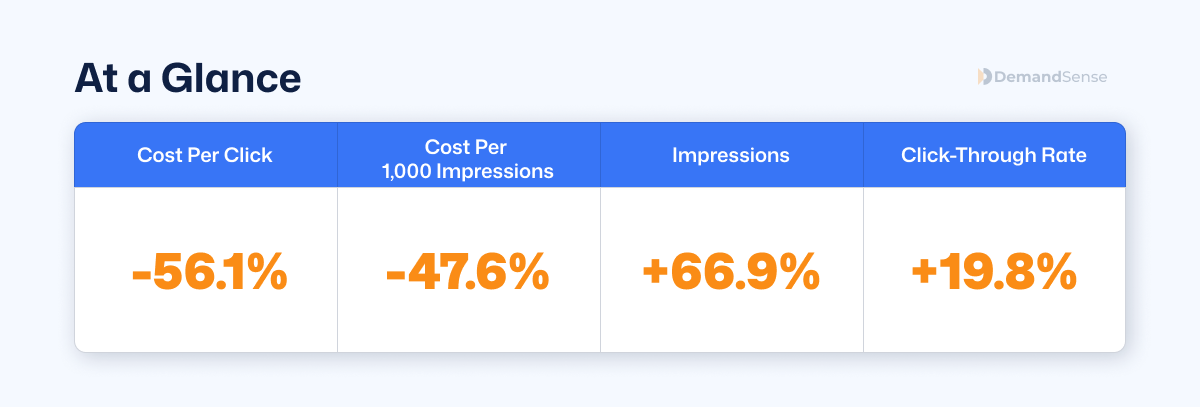
- Cost per click dropped 56.1%, from paying for clicks that might come at any random hour to paying only for clicks during high-intent windows. For campaigns running at scale, this kind of efficiency gain fundamentally changes budget allocation.
- CPM decreased 47.6%, meaning the agency paid nearly half as much per thousand impressions. This wasn't just about timing—it was about competing in less crowded auction windows and improving relevance scores through better engagement.
Reach and Engagement Both Expanded
- Impressions increased 66.9% despite running fewer total hours. By concentrating budget during peak windows, the campaign won more auctions and reached more people overall.
- Click-through rate improved 19.8%. Ads showing up at 10am on a Tuesday simply performed better than ads showing up at 11pm on a Sunday. People were more receptive, more engaged, and more likely to click through to the content.
What This Means at Scale
For an agency managing multiple client accounts, these efficiency gains compound fast:
- The same budget now reaches 67% more people
- Each click costs half as much, stretching budget further
- Higher CTR improves quality scores, which drives down future costs
- Better engagement creates more opportunities for organic reach through social proof
Put simply: the agency could now deliver better results to clients without increasing spend—or maintain the same results at significantly lower cost.
Why It Worked
The results weren't accidental. They align with how B2B professionals actually use LinkedIn.
- Business hours drive B2B engagement. Decision-makers research solutions, read thought leadership, and engage with professional content during working hours—not at midnight or on weekends. Concentrating delivery during these windows means ads appear when intent is highest.
- Weekday focus matches buying behavior. B2B purchasing decisions happen Monday through Thursday. By Friday, people are wrapping up the week and mentally checking out. The scheduled approach avoided wasting impressions during low-intent periods.
- Peak hours reduce competition. Counter-intuitively, running ads during "business hours only" can actually reduce competition. Many advertisers still run 24/7, spreading their budget thin. By concentrating spend strategically, the agency competed more effectively during the windows that mattered.
- Thought leadership benefits from attention. Unlike direct response ads optimized for immediate conversions, thought leadership content needs engaged readers who will actually consume the content. Scheduling ensured ads reached people when they had the mental bandwidth to engage deeply.
Key Takeaways
This test revealed several critical insights about LinkedIn ad optimization:
- Timing affects more than just engagement. It changes economics. Better timing doesn't just improve CTR. It reduces costs, expands reach, and compounds across every metric that matters.
- Always-on delivery isn't always optimal. LinkedIn's default 24/7 approach prioritizes spending your budget over spending it efficiently. For most B2B campaigns, strategic scheduling delivers better results.
- Test with real controls. The agency didn't just turn on scheduling and hope for the best. They ran a controlled A/B test with identical creative and targeting to isolate the impact of timing alone.
- Industry patterns matter. What works for a B2B marketing agency (weekday business hours) might differ for other industries. The key is understanding when your specific audience is engaged and building your schedule around that behavior.
- Small optimizations compound at scale. A 56% reduction in CPC might sound incremental, but across multiple campaigns and clients, it fundamentally changes how budgets perform.
Can You Schedule LinkedIn Ads?
Not natively. LinkedIn's Campaign Manager lets you set a start and end date, and choose between daily or lifetime budgets, but there's no built-in way to control when during the day your ads actually run.
That means by default, your campaigns serve 24/7 until the daily budget runs out. For B2B advertisers, that's a problem: you're paying for impressions at 2am on a Sunday the same way you pay for impressions at 10am on a Tuesday (even though your audience is only meaningfully present for one of those).
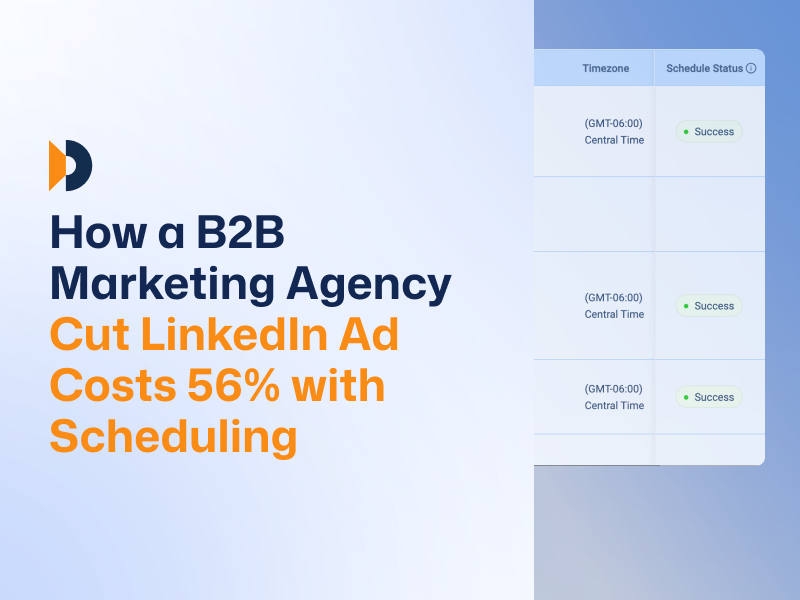
Third-party tools like DemandSense fill that gap. You set the hours and days you want your ads to run, and delivery stops outside those windows, giving you the kind of control LinkedIn doesn't offer natively. The results above show what that control can do.
The Bigger Picture
Ad scheduling solved one specific problem—wasted budget during off-hours. But it also highlighted a broader truth about LinkedIn optimization: the platform's native tools leave gaps that require external solutions.
LinkedIn doesn't offer hourly dayparting because it's optimized for spending your budget, not for giving advertisers granular control. That's where tools like DemandSense come in—filling the gaps between what LinkedIn provides and what B2B advertisers actually need.
Beyond scheduling, that means:
- Frequency capping to prevent ad fatigue
- Visitor identification to connect ad clicks to actual account behavior
- Cross-channel attribution to understand the full customer journey
- Budget controls that go beyond LinkedIn's basic daily caps
For this agency, scheduling was the entry point. But the real value came from having complete control over campaign delivery—deciding not just who sees ads and what they see, but when they see it.
Want to Test This Yourself?
These results came from a controlled test using DemandSense's ad scheduling capabilities. If you're running LinkedIn campaigns and wondering whether strategic timing could improve your performance, the only way to know is to test it.
Watch a short demo to see how DemandSense's LinkedIn ad controls work, or learn more about our scheduling features